Credit Monitoring vs Identity Theft Protection: Key Differences
Credit monitoring alerts you to changes in your financial files, while identity theft protection adds active tools to stop fraud and restore your identity after a breach.
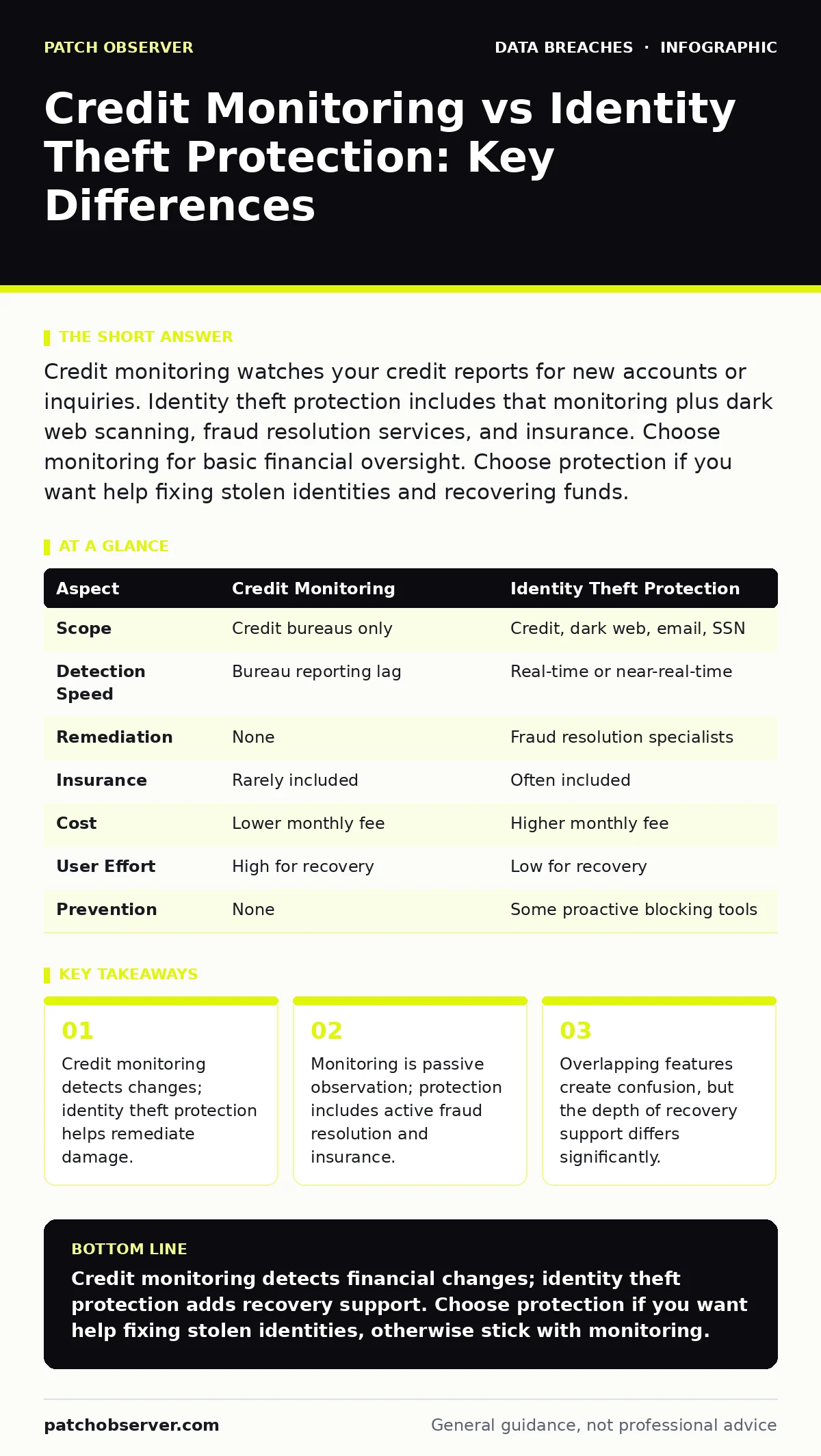
Credit monitoring watches your credit reports for new accounts or inquiries. Identity theft protection includes that monitoring plus dark web scanning, fraud resolution services, and insurance. Choose monitoring for basic financial oversight. Choose protection if you want help fixing stolen identities and recovering funds.
The Core Difference Between Credit Monitoring vs Identity Theft Protection
Identity theft protection includes that monitoring but adds dark web scanning, fraud resolution services, and identity restoration insurance. Monitoring tells you something happened. Protection helps you fix it. The distinction matters because detecting a stolen Social Security number is useless if you lack the resources to freeze accounts and dispute fraudulent charges. Monitoring provides the alarm. Protection provides the firefighter. You need to know which layer of defense suits your risk profile and available time for recovery.
What Is Credit Monitoring?
Credit monitoring services subscribe to updates from the three major credit bureaus. They alert you when a new account opens, a hard inquiry occurs, or your credit score changes significantly. This service focuses exclusively on financial data tied to your credit history. It does not scan the dark web for your personal information. It does not monitor your email accounts for compromise. It does not track bank account balances. The mechanism relies on periodic polling of bureau data. Delays in reporting mean alerts may arrive days after the initial fraud event. This lag allows criminals to establish accounts before you see the warning.
What Is Identity Theft Protection?
Identity theft protection services bundle credit monitoring with additional surveillance tools. They scan the dark web for leaked credentials and personal data. They monitor your email account for signs of compromise. They often include features to detect misuse of your Social Security number in non-credit contexts. The critical differentiator is the remediation component. These services employ specialists to dispute fraudulent charges, freeze credit files, and navigate bureaucratic recovery processes. They often include insurance policies that cover out-of-pocket costs during restoration. This layer addresses the aftermath, not just the detection.
Point-by-Point Comparison of Services
| Aspect | Credit Monitoring | Identity Theft Protection |
|---|---|---|
| Scope | Credit bureaus only | Credit, dark web, email, SSN |
| Detection Speed | Bureau reporting lag | Real-time or near-real-time |
| Remediation | None | Fraud resolution specialists |
| Insurance | Rarely included | Often included |
| Cost | Lower monthly fee | Higher monthly fee |
| User Effort | High for recovery | Low for recovery |
| Prevention | None | Some proactive blocking tools |
When to Choose Credit Monitoring
Choose credit monitoring when you maintain strict control over your own financial hygiene. You should select this option if you regularly check your own credit reports and have existing protocols for freezing your credit. This fits users who prefer low-cost surveillance without bundled services they may never use. It suits individuals with minimal exposure to public data leaks. If you already use full disk encryption and practice strong email account compromise prevention, the added value of dark web scanning diminishes. Monitoring serves as a lightweight sensor. It works best when you treat it as one input among many in your personal security routine.
See also: Data Breaches Explained: Causes, Impacts, and Real Risk Reduction · Medical Identity Theft Mistakes That Expose Patient Records
When to Choose Identity Theft Protection
Choose identity theft protection when you lack time or expertise to manage complex fraud recovery. This option suits individuals with high exposure to data scraping risks or previous incidents of medical identity theft. It benefits those who want a single vendor to handle disputes with banks and creditors. The insurance component provides financial safety nets for legal fees and lost wages. If you rely on cloud infrastructure, understanding misconfigured cloud storage leaks helps you appreciate why external monitoring matters. Protection services act as an outsourced security operations center for your personal identity. They reduce the cognitive load of managing multiple recovery channels.
Where the Services Overlap
Both provide alerts for new accounts and inquiries. Both may offer credit freeze assistance. The overlap creates marketing confusion. Vendors often label basic monitoring as protection. You must read the fine print regarding remediation. Does the service dispute fraud for you, or only tell you to do it? Does it cover dark web data, or only credit data? Overlap areas are often the cheapest features. The value lies in the exclusive features. Evaluate the remediation depth before committing. Do not assume monitoring includes restoration. Do not assume protection includes comprehensive coverage.
Key takeaways
- Credit monitoring detects changes; identity theft protection helps remediate damage.
- Monitoring is passive observation; protection includes active fraud resolution and insurance.
- Overlapping features create confusion, but the depth of recovery support differs significantly.
Credit monitoring detects financial changes; identity theft protection adds recovery support. Choose protection if you want help fixing stolen identities, otherwise stick with monitoring.
Frequently asked questions
Does credit monitoring prevent identity theft?
No, credit monitoring only alerts you to changes in your credit reports. It does not block fraudulent activity or prevent data breaches.
Can I get identity theft protection for free?
Some banks offer basic credit monitoring for free. Comprehensive identity theft protection with remediation and insurance usually requires a paid subscription.
How quickly do credit monitoring alerts appear?
Alerts depend on how fast creditors report to bureaus. This lag can take days or weeks, meaning fraud may occur before you receive a notification.
Is dark web scanning part of credit monitoring?
Standard credit monitoring does not include dark web scanning. This feature is typically reserved for broader identity theft protection packages.
How this guide was produced: written by the Patch Observer editorial team with AI assistance, checked against the public references listed below, and reviewed when the facts change. See our editorial policy or report an error.