Spanish Neanderthal Wood Survived Millennia Thanks To Dissolved Minerals Forming Protective Stone Shell
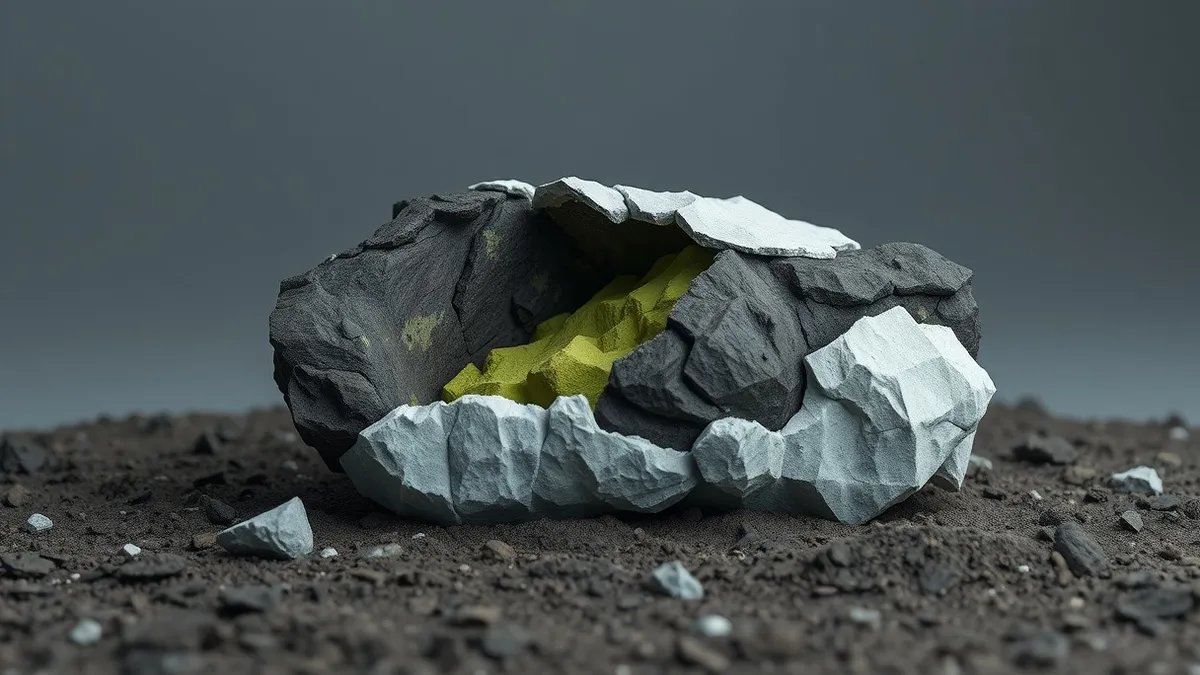
Archaeologists report that dissolved rock minerals formed a protective stone casing around ancient wooden artifacts in Spain, allowing them to survive for millennia.
Key points
- Wooden tools from Neanderthals were discovered in Spain.
- The artifacts were preserved by mineral precipitation from dissolved rock.
- The wood decayed after the surrounding stone formed around it.
Neanderthal wooden tools have been identified in Spain, preserved within stone formations created by mineral precipitation. According to Ars Technica, the discovery highlights a rare preservation method where dissolved rock minerals encased the organic materials. This process protected the tools from immediate decomposition, allowing researchers to recover evidence of Neanderthal technology that would otherwise have vanished from the archaeological record.
How it unfolded
- Researchers identified wooden artifacts associated with Neanderthals in a Spanish site.
- Dissolved rock minerals in the surrounding environment began to precipitate around the wooden objects.
- The mineral precipitation formed a solid stone casing that enclosed the tools.
- The wooden tools eventually decayed inside the protective stone structure, leaving their form preserved.
Who is affected
Archaeologists and historians studying Neanderthal technology are directly affected by this finding, as it provides physical evidence of wooden tool usage. According to Ars Technica, the preservation method relies on specific geological conditions where rock dissolves and then re-solidifies around organic matter. This discovery impacts the understanding of how organic artifacts survive in the fossil record, particularly in regions with specific mineral compositions.
Our take on the response
The preservation mechanism described by Ars Technica demonstrates how geological processes can inadvertently archive human history. The fact that the wood decayed after the stone formed suggests the mineral casing was created while the tools were still intact. This sequence of events is critical for interpreting similar archaeological finds, as it explains why some organic materials survive in stone contexts while others do not.
What to do and how to stay safe: Neanderthal
- Review site assessments for potential mineral-rich environments that could preserve organic artifacts.
- Monitor geological surveys for areas with high levels of dissolved rock minerals.
- Check archaeological databases for similar preservation cases involving mineral precipitation.
- Consult geological experts when interpreting the context of stone-encased artifacts.
Step-by-step guide: How Smartphone Security Updates Work: The Hidden Chain
General security guidance from the Patch Observer newsroom. It is not confirmed advice from the organisations named in this story.
Frequently asked questions
How were the Neanderthal tools preserved in Spain?
The tools were preserved because dissolved rock minerals precipitated around them, forming a protective stone casing before the wood decayed.
Where were these Neanderthal wooden tools found?
The wooden tools were found in Spain, according to the report by Ars Technica.
What happened to the wood after the stone formed?
The wood decayed after the mineral precipitation formed the surrounding stone structure.