MRI data shows psilocybin reshapes brain connectivity in real time during meditation sessions
New research captures real-time shifts in brain patterns when participants meditate under the influence of psilocybin inside an MRI scanner.
Key points
- Participants underwent MRI scans while meditating both with and without psilocybin.
- The study reveals how psilocybin transforms brain connectivity during meditative states.
- Ars Technica reported on the findings regarding real-time neural shifts.
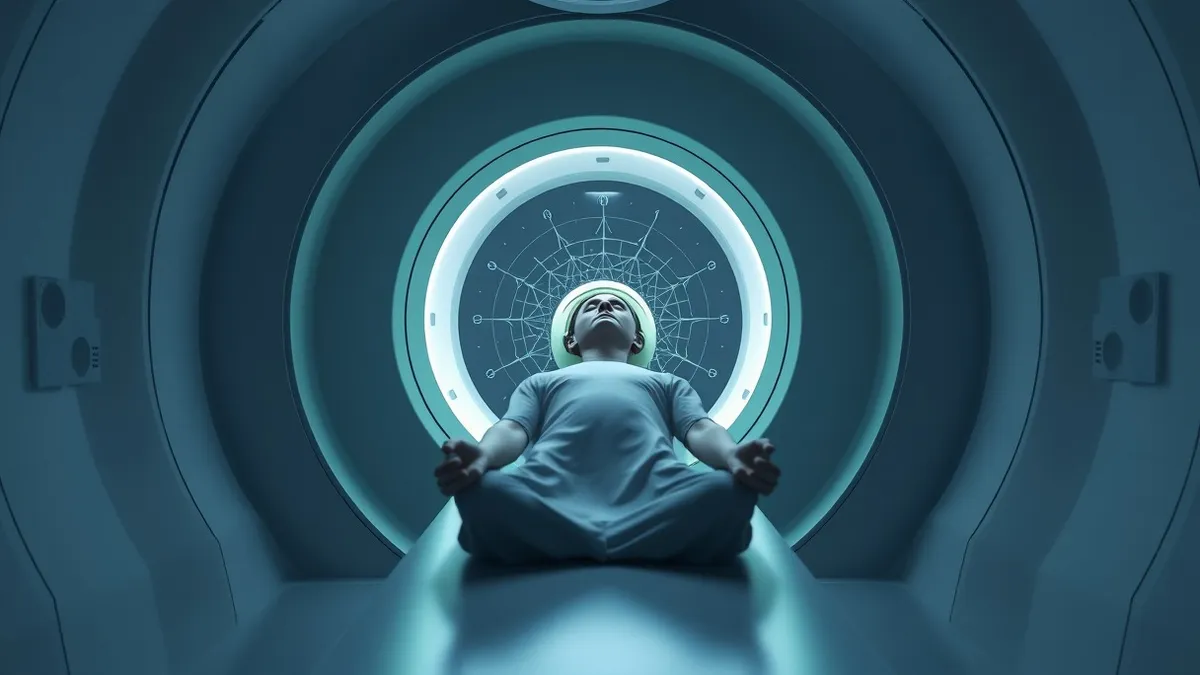
Recent neuroimaging research provides new insight into how psychedelic substances interact with meditative practices. According to a report by Ars Technica, scientists observed participants meditating inside an MRI tube under two distinct conditions. The study compared brain activity when subjects meditated without any substance against activity when they meditated after consuming psilocybin. This experimental design allows for a direct comparison of neural connectivity patterns.
How it unfolded
- Researchers placed participants inside an MRI scanner to capture high-resolution brain images during meditation sessions.
- The study team recorded neural activity while participants meditated in a sober state to establish a baseline.
- Participants then consumed psilocybin and underwent the same meditation protocol while being scanned.
- Ars Technica highlighted the resulting data showing transformed brain patterns during the psychedelic experience.
Who is affected
The primary subjects of this study were the participants who volunteered for the neuroimaging experiment. These individuals experienced the direct physiological effects of psilocybin while performing structured meditation exercises. For business leaders in healthcare or pharmaceutical sectors, this research represents a data point in the broader understanding of psychedelic therapy mechanisms. It does not indicate an immediate operational risk or cybersecurity threat to organizations.
The findings contribute to the scientific literature on consciousness and neural plasticity. Organizations involved in clinical research may reference this methodology when designing future trials involving psychedelic-assisted therapies. However, the study itself is an observational report on brain connectivity, not a product launch or a security vulnerability disclosure. No commercial software or infrastructure was compromised or affected by this research activity.
Our take on the response
Ars Technica published a summary of the study, focusing on the visual and data-driven evidence of brain transformation. The outlet reported that the MRI captured real-time shifts in connectivity, offering a "new look" at how psychedelics alter mental states. This reporting style emphasizes the scientific novelty of capturing such dynamic changes in a controlled environment.
For managed service providers and IT leaders, this story serves as a reminder that not all news cycles involve immediate technical remediation. This is a scientific observation rather than a security incident. There is no patch, fix, or update required for any software systems based on this report. The risk to organizational operations is negligible, as the study involves human subjects and medical imaging equipment, not networked enterprise assets.
What to do and how to stay safe: psilocybin
- Monitor scientific publications for emerging trends in pharmaceutical research that may impact healthcare clients.
- Ensure that internal communications teams can distinguish between scientific studies and security vulnerabilities.
- Review vendor contracts for healthcare clients to understand data handling requirements for clinical research.
- Once the vendor provides an update on any related medical imaging software, apply standard patching procedures.
Step-by-step guide: How Smartphone Security Updates Work: The Hidden Chain
General security guidance from the Patch Observer newsroom. It is not confirmed advice from the organisations named in this story.
Frequently asked questions
Does this study reveal a cybersecurity vulnerability in MRI machines?
No, the study focuses on brain connectivity patterns in human subjects, not software flaws in medical equipment.
Is there a patch available for the software used in this research?
No fix has been confirmed yet because this is a scientific study, not a security incident requiring remediation.
How did the researchers measure the effects of psilocybin?
Participants meditated inside an MRI tube, with and without psilocybin, allowing for direct comparison of brain scans.