Microsoft’s new AI chip racks demand massive power for next-gen deployments
The company plans multi-gigawatt rollouts of its custom Maia 300 silicon, with each rack consuming significant energy for high-density computing.
Key points
- Microsoft announced its next-generation custom AI chip, the Maia 300, on Monday.
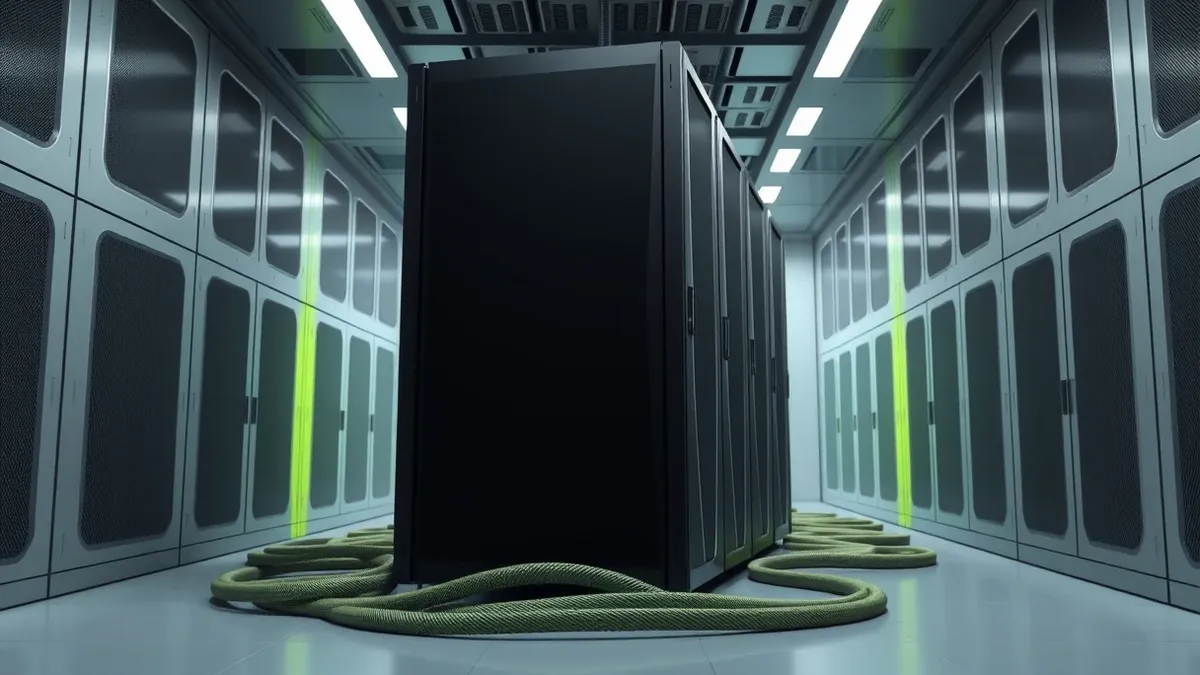
- Each rack will hold 96 chips and consume approximately 167 kilowatts of power.
- The company plans to deploy these chips in multi-gigawatt configurations starting next year.
Microsoft has outlined the technical specifications and deployment strategy for its next-generation custom artificial intelligence processor, the Maia 300. According to a report by Reuters, the tech giant announced the chip on Monday, marking a significant step in its hardware development roadmap. The announcement details the physical density and energy requirements of the new silicon, providing clarity on how the company intends to scale its AI infrastructure. This move underscores the growing complexity of AI hardware deployment.
How it unfolded
- Microsoft announced the Maia 300 chip on Monday, revealing its plans for future AI infrastructure expansion.
- The company specified that each server rack will contain 96 individual Maia 300 chips to maximize computational density.
- Microsoft stated that these racks will draw approximately 167 kilowatts of power, highlighting the substantial energy needs of the new hardware.
- The firm plans to begin rolling out these chips in multi-gigawatt deployments starting next year, indicating a large-scale infrastructure commitment.
Who is affected
Data centers and cloud infrastructure providers will need to prepare for significantly higher power demands to support Microsoft’s new AI hardware. The specification of 167 kilowatts per rack represents a substantial energy consumption figure for server equipment. Organizations relying on Microsoft’s cloud services may see changes in how AI workloads are hosted and scaled. The shift toward multi-gigawatt deployments suggests that Microsoft is building out large-scale infrastructure to support these custom chips.
Managed service providers should note that the density of 96 chips per rack implies a high concentration of compute resources in a single physical unit. This configuration requires careful planning for power delivery and thermal management in data centers hosting Microsoft’s AI services. Providers must account for the logistical challenges of deploying such power-intensive equipment at scale. The specific metrics provided by Microsoft allow for more precise capacity planning.
Our take on the response
The focus on multi-gigawatt deployments indicates that Microsoft is prioritizing raw computational scale for its AI initiatives. By customizing the chip architecture, the company is developing hardware specifically for its AI needs. However, the high power draw per rack presents significant operational considerations for data center operators. Balancing performance needs with energy constraints will be a critical factor in the successful rollout of this technology.
Microsoft’s strategy reflects the broader industry trend toward specialized hardware for artificial intelligence. The decision to announce specific power and density metrics provides transparency for partners and customers planning their infrastructure upgrades. This approach allows stakeholders to better anticipate the requirements for hosting next-generation AI services. The company’s commitment to large-scale deployment suggests confidence in the demand for advanced AI capabilities.
What to do and how to stay safe: Microsoft
- Review current data center power capacity to ensure it can support high-density server racks with increased energy demands.
- Assess cooling infrastructure to handle the thermal output of racks consuming approximately 167 kilowatts of power.
- Monitor vendor announcements for updates on deployment timelines and technical requirements for new AI hardware.
- Evaluate existing AI workload strategies to determine if custom silicon solutions offer better performance or cost efficiency.
Step-by-step guide: How Smartphone Security Updates Work: The Hidden Chain
General security guidance from the Patch Observer newsroom. It is not confirmed advice from the organisations named in this story.
Frequently asked questions
What is the power consumption of a single Maia 300 rack?
According to Reuters, each rack holding 96 Maia 300 chips will use approximately 167 kilowatts of power.
When does Microsoft plan to deploy the Maia 300 chips?
Microsoft plans to roll out multi-gigawatt deployments of the Maia 300 chip starting next year.
How many Maia 300 chips will be in each rack?
Microsoft stated that each rack will hold 96 Maia 300 chips.